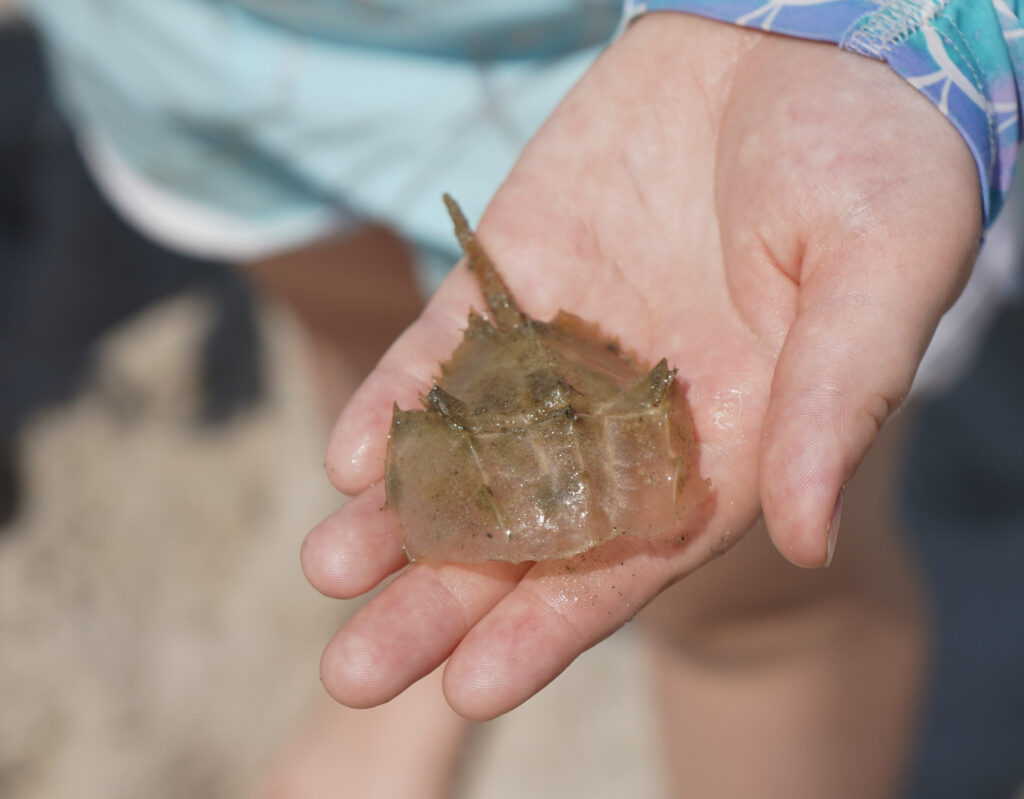
Horshoe Crab
About Us About The Bays Get Involved! Research Restoration Education Public Policy
Welcome
    News from the watershed:
Inland Bays Journal: Inland Bays Journal Summer 2010
image In this issue
  • Terrapin Joins Volunteers to Welcome Mrs. Markell

  • Not just Bays but a way of life...

  • Good News on Love Creek

  • 2010 IB Recreation Water Quality Report

  • CIB Volunteers Take the Lead Counting Horseshoe Crabs!


  • Click here to read the Journal online


        More News From The Inland Bays...
    You've seen the front yard...Now check out the Back!
    image Ready for a day off the beach! Explore the shady trails and quiet waters of the Inland Bays! Our new brochure will give you tips on some of the special places you can walk or paddle.
    Click here to read the brochure online
  • Read more...


    Inland Bays Recreational Water Quality Report: 2nd Edition
    image Whether its swimming, paddling, or wading along the shoreline, the waters of the Inland Bays offer cool relief during the hot days of summer. More people than ever are enjoying the Bays as the local population grows, and ecotourism increases in popularity. To help educate people about the water quality of the Bays for swimming, the Center for the Inland Bays has published the second edition of its Recreational Water Quality Report.

  • Click here to download a copy of the report.


  • Click here to download a copy of the technical report detailing methodology, data, and potential sources of bacteria.

  • Read more...


    Gulf Oil Spill & the CIB/National Estuary Program

    image The Center for the Inland Bays is one of 28 National Estuary Programs (NEP) designated by Congress. Two of our "sister" NEPs in the Gulf of Mexico have been directly impacted by the BP Deepwater Horizon Oil Spill: the Barataria-Terrebonne Estuary Program http://www.btnep.org in Louisiana and the Mobile Bay Estuary Program http://www.mobilebaynep.com in Alabama.

    Click here for the latest GIS information and analysis about the Gulf oil spil... http://www.geoplatform.gov/gulfresponse/

    Also, get the latest news about Delaware Coast Gulf Aid at http://www.decoastgulfaid.org/ or on Facebook at "Delaware Coast Gulf Aid"

  • Read more...


    Bethany Beach Nature Center open Everyday!
    imageThe Bethany Beach Nature Center, located at 807 Garfield Parkway (Rt. 26) about ½ mile west of Route 1 on the right just past Grotto’s Pizza, will be open seven days a week through mid-August from 10 a.m. until 3 p.m.

    The Town of Bethany Beach and the Delaware Center for the Inland Bays have partnered to provide nature experiences and education at the Nature Center to introduce residents and visitors to the unique habitats of the Inland Bays. The 26-acre conservation area includes three acres of forested uplands, nine acres of freshwater wetlands, and fourteen acres of tidal wetlands.

    Inside, visitors can explore interactive exhibits, including “Our Inland Bays...A Delicate Balance,” which allows visitors to “virtually” explore the Inland Bays watershed from the headwater streams, through the maritime forests, across the salt marshes to the bays using a state-of–the-art presentation called an “I-Wall.”

    Outside, visitors can make a similar exploration through forest and marsh along a handicap-accessible boardwalk with has been built to lead you through each habitat with educational signage to keep you informed along the way.

    The popular Saturday morning children's progam continues this summer from 10:30 a.m. until noon every week and adults are invited to a new Monday morning outing, "A Walk at the Pond every Monday at 10:15 a.m.

    There is no charge for the either event, but children must be accompanied by an adult at the Saturday morning program.

    The Bethany Beach Nature Center opened in 2009 in the historic Addy Cottage, one of original Bethany Beach cottages that was moved to the site and restored by the town. The Bethany Beach Nature Center trail is open daily from dawn until dusk. For more information call the BBNC at 537-7680.
  • Read more...


    TERPS are on the move!
    image Just as people head for the beaches and the soft Atlantic sands at the beginning of summer, so do the Diamondback terrapins.

    From late-May through the end of July, the Diamondback terrapin leaves the relative safety of the coastal marshes and bays to go to the higher, sandy ground of the Atlantic dunes to lay its eggs. To reach their nesting areas, female terrapins are killed each year attempting to cross Rt. 1 in Delaware Seashore State Park, one of the state’s prime nesting areas for this species.

    TERP volunteers assist by patroling the highway and moving turtles off the road. Because female terrapins mature late and have a long reproductive lifespan, the loss of a single female represents the loss of many years of potential offspring. Every female rescued is significant in assuring the future of the Diamondback terrapin in the Delaware Inland Bays. The Diamondback Terrapin is listed as a species of concern in Delaware and several other states.

    For information about how you can join the TERP Patrol contact E.J. Chalabala at 226-8105 or at restoration@inlandbays.org
  • Read more...


    Inland Bays - Atlantic Ocean Basin
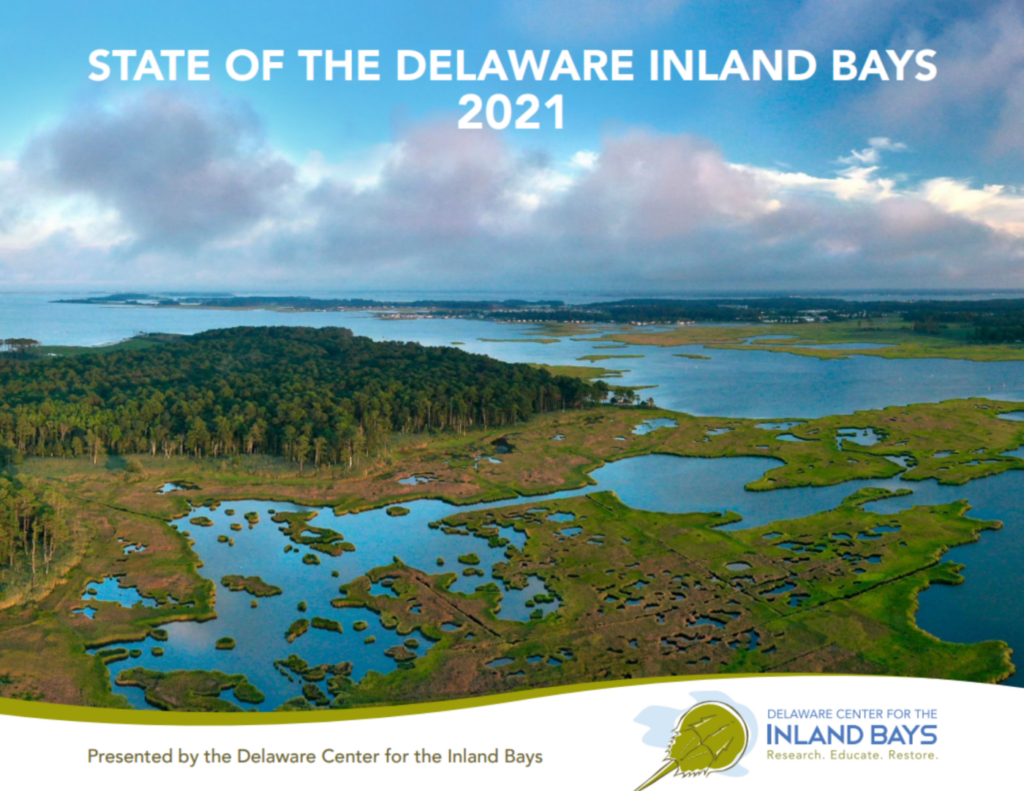
    Delaware's Inland Bays, designated an estuary of national significance in 1988, cover 32 square mile and drain a watershed area of about 320 square miles in southeastern Sussex County Delaware. They are separated by a narrow barrier beach from the Atlantic Ocean. Indian River Bay is a shallow drowned river valley system with freshwater inflow and a direct connection to the ocean through the Indian River Inlet. Rehoboth Bay is a shallow coastal lagoon system behind a narrow barrier island. It connects to the ocean by the Lewes and Rehoboth Canal and the Indian River Bay. The smallest and shallowest is Little Assawoman Bay which connects to the ocean via the Ocean City Inlet.

    Because they are so shallow, with an average depth ranging from 3 to 8 feet, and because they are poorly flushed by tidal movement, they are especially sensitive to environmental changes. Increases in pollutants, changes in salinity and fluctuations in water temperature, for example, can have dramatic effects on water quality and on the plants, fish, shellfish, and microscopic creatures that live in the bays.

  • Click here to see a larger version of this map.
  • Bay Watch
    Get Decked Out!
    image Call the office at 302-226-8105 to see if there are still available tickets!
  • Read more...


  • Please join us!
    Decked Out!
    Don't miss our annual deck party!
    Thursday, July 29th
    7 p.m. until 10 p.m.
    On the deck at the CIB!
    $40 until July 23rd
    Click on 'Read More' below to buy your tickets online!
  • Read more...


    3rd Annual Paddlin for the Bay!
    Poker Paddle and Cookout!
    Saturday, August 21st
    10 a.m. until 2 p.m.
    at Bayfront at Rehoboth
    on Camp Arrowhead Road
    Click on 'Read More' for info on how to register
  • Read more...


    crab Read past issues of the
                    Inland Bays Journal.

    crab I'm new to the watershed
                    show me around.

    crab I'd like to become a friend
                    to the Bay!

    crab I'd like to volunteer
                    for the Bays.

    crab I'd like to find more
                    online resources.


    Estuaries: Where the rivers meet the seas...

    Delaware's Inland Bays are
    "an estuary of national significance"
    and part of the
    National Estuary Program.


    View Larger Map